
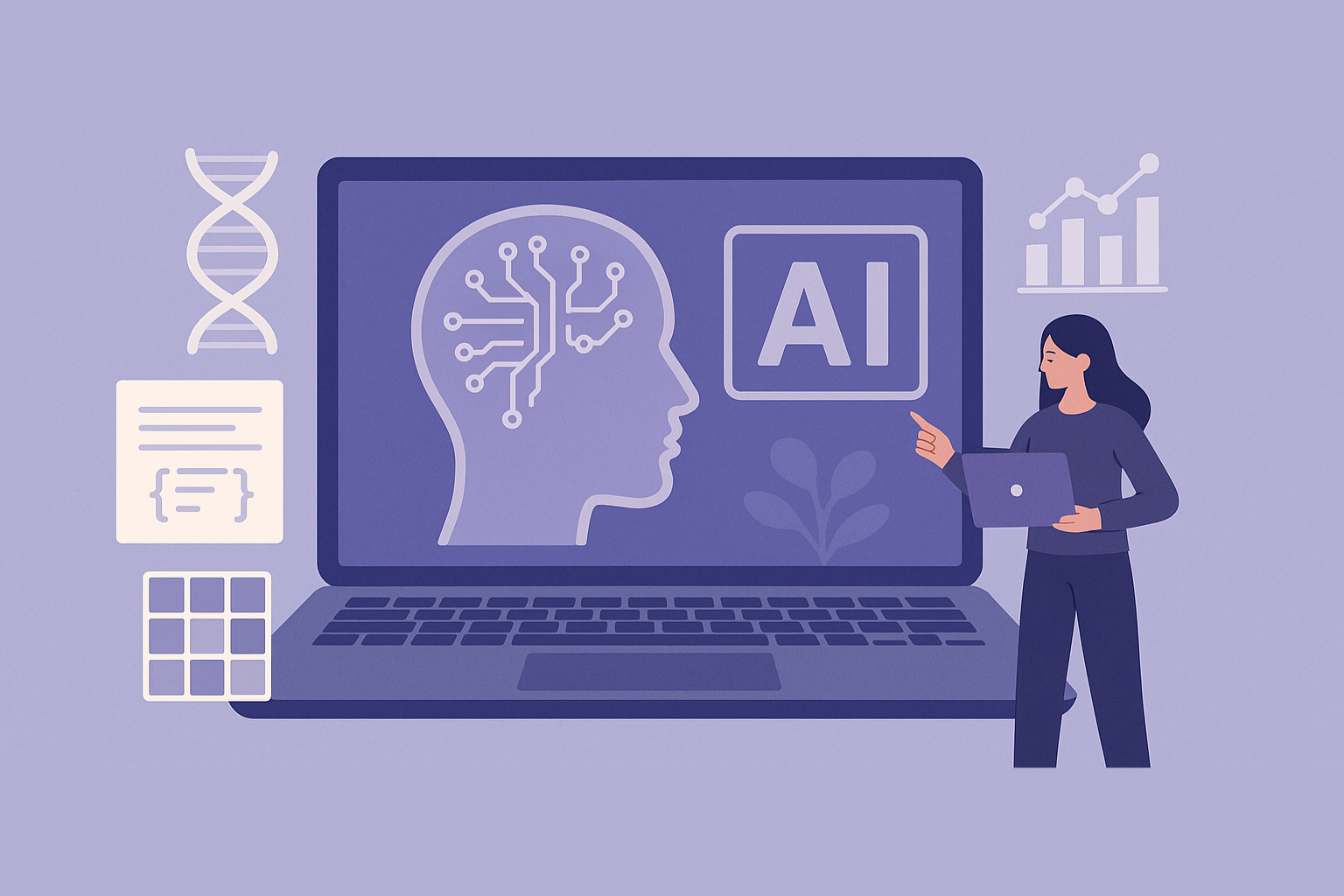
What is Generative AI?
Imagine a technology that can create realistic images, write compelling stories, or compose music in seconds—welcome to the world of Generative AI! Generative Artificial Intelligence (Generative AI) is a groundbreaking branch of AI that enables machines to produce original content, such as text, images, audio, and even videos, by learning patterns from vast datasets. Unlike traditional AI, which follows strict rules or predefined instructions, Generative AI leverages advanced algorithms like neural networks to mimic human creativity, making it a game-changer for industries ranging from marketing to entertainment. In this article, we’ll explore what Generative AI is, its key features, applications, benefits, and its transformative potential for businesses.
What Makes Generative AI Unique?
Generative AI stands out due to its ability to create entirely new content rather than just analyzing or processing existing data. It uses models like Generative Adversarial Networks (GANs), Variational Autoencoders (VAEs), and large language models (LLMs) to generate outputs that are often indistinguishable from human-created work. Here’s what defines Generative AI:
- Creativity Simulation: It mimics human-like creativity by generating novel content based on learned patterns.
- Data-Driven Learning: Trained on massive datasets, it identifies trends and structures to produce coherent outputs.
- Versatility: Capable of generating diverse content types, including text, images, music, and synthetic data.
- Autonomous Operation: Once trained, it can generate content with minimal human intervention.
These features make Generative AI a powerful tool for businesses looking to innovate and streamline creative processes.
Applications of Generative AI
Generative AI is transforming industries by automating and enhancing creative tasks. Below are some key application areas:
| Application Area | Description |
|---|---|
| Content Creation | Produces blog posts, social media content, and marketing copy tailored to specific audiences. |
| Design and Art | Creates realistic images, logos, or 3D models for graphic design and product development. |
| Entertainment | Generates music, scripts, or video game assets, reducing production time and costs. |
| Healthcare | Synthesizes medical images or simulates drug molecules to accelerate research. |
| E-commerce | Personalizes product descriptions and generates virtual try-on visuals for customers. |
| Synthetic Data Generation | Creates artificial datasets for training AI models when real data is scarce or sensitive. |
For example, companies like OpenAI and MidJourney have leveraged Generative AI to produce tools like ChatGPT and DALL·E, enabling businesses to create high-quality content at scale. According to a 2025 McKinsey report, 30% of enterprises have adopted Generative AI for content creation, boosting productivity by up to 25% (McKinsey).
Benefits of Generative AI for Businesses
Generative AI offers significant advantages for companies aiming to stay competitive in a fast-evolving digital landscape:
- Enhanced Efficiency: Automates time-consuming tasks like content writing or design, saving hours of manual work.
- Cost Savings: Reduces the need for extensive human resources in creative and technical processes.
- Personalization: Delivers tailored content to meet customer preferences, improving engagement and conversions.
- Scalability: Generates large volumes of content quickly, enabling businesses to meet growing demands.
- Innovation Boost: Frees up human creativity for strategic tasks, driving innovation across industries.
These benefits make Generative AI a must-have tool for businesses looking to optimize operations and enhance customer experiences.
The Future of Generative AI
The future of Generative AI is bright, with its potential continuing to expand as algorithms improve and computational power grows. By 2030, experts predict that Generative AI could contribute up to $15.7 trillion to the global economy, with applications in autonomous content creation, virtual reality, and personalized education (PwC). As businesses integrate this technology, understanding its capabilities will be crucial for staying ahead in a competitive market.
Conclusion
Generative AI is revolutionizing how businesses create, innovate, and engage with their audiences. From crafting compelling marketing content to designing cutting-edge products, this technology empowers companies to push boundaries and achieve more with less. By adopting Generative AI, your business can unlock new levels of efficiency, creativity, and growth. Ready to harness the power of Generative AI? Explore its potential today and transform the way you work!